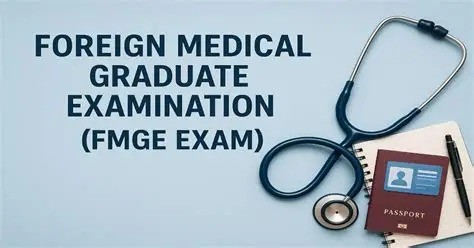
It's time to address the "NEET Gap." While the social prestige of a medical career remains strong, the data from 2026 reveal a clear mismatch between aspirations and the limited number of available seats. With 20,00,000 students competing for roughly 1,00,000 spots, we are facing a reality where 95% of aspiring doctors must find a 'Plan B', regardless of their dedication.
The question is no longer "Can I become a doctor?" It has become: "Where can I become one?"
Image source: AI generated image
NEET Seat Crisis in India: Why Students Are Looking Abroad
The math is simple but harsh. In 2026, the demand for medical seats in India has far exceeded the available supply, leaving millions of qualified students without opportunities. While private colleges are an option, their fees are often inaccessible for middle-class households. Rather than wasting multiple gap years in the "NEET coaching cycle" or settling for a different career path, students are looking across borders.
Studying abroad offers:
- Budget-Friendly Tuition: High-quality medical education without the "private college" price tag.
- Global Exposure: Learning in an international environment.
- Modern Infrastructure: Build a global network and a diverse clinical perspective that Indian hospitals increasingly value.
Why Indian Medical Aspirants Choose the Philippines
Unlike many European or Central Asian destinations where students struggle with local language barriers (like Russian or Mandarin) and vastly different climates, the Philippines offers a "home away from home" experience.

Image source: AI generated image
The English-Medium Education Advantage
One of the biggest hurdles in countries like Russia, China, or Georgia is the "dual-language" trap. However, in the Philippines, English is the medium of instruction. As the world's third-largest English-speaking nation, the Philippines uses English for all lectures, textbooks, and—most importantly—clinical rotations with patients.
US-Based Curriculum Structure: Why It Matters

Image source: AI generated image
The Philippine medical education system is modeled directly after the United States. This is a game-changer for students with global ambitions.
- Problem-Based Learning: The curriculum focuses on clinical reasoning rather than just rote memorization.
- USMLE Prep: Because the syllabus aligns with American standards, students from the Philippines consistently perform better on the USMLE (United States Medical Licensing Examination).
- Integrated Learning: It bridges the gap between basic sciences and clinical application early on.
Clinical Exposure in Government Hospitals
A doctor's skill is shaped by the patients they've actually treated. In many foreign countries, international students are restricted from touching patients or are limited to "observation only." In the Philippines, Indian students get hands-on clinical clerkships in high-volume government hospitals. Because Filipinos speak English (and the local dialect is easy to pick up), you can actually talk to your patients, take their history, and assist in procedures. This real-world experience is what prepares you for the NExT/FMGE exam in India.
Cultural Similarities: A Slice of India in Southeast Asia

Image source: AI generated image
Will I get Indian food? Is it safe? These are the questions every parent asks.
- Food: Most university hostels in the Philippines serve authentic Indian veg and non-veg meals. Plus, rice is a staple there, just like in India!
- Climate: The tropical weather is almost identical to coastal India (like Mumbai or Chennai), meaning you don't have to deal with -20°C winters.
- Safety: The Philippines is known for its hospitality. Major student hubs like Manila, Cebu, Davao and Vizcaya have a massive, supportive Indian community.
Cost Comparison: Philippines vs. India vs. Others
- Indian Private College – Total Fees: ₹80 Lakhs–₹1.2 Crore | Living Cost: Moderate to High | Success Rate: High
- Philippines Medical College – Total Fees: ₹25 Lakhs–₹35 Lakhs | Living Cost: Affordable/Low | Success Rate: High (US-Based Model)
- Other Countries (Russia/China) – Total Fees: ₹20 Lakhs–₹40 Lakhs | Living Cost: Variable | Success Rate: Moderate
FMGE/NExT Relevance for Philippines Graduates
To practice in India, foreign medical graduates must pass the NExT (National Exit Test). The Philippines has traditionally boasted some of the highest passing percentages for Indian students. Why? Because the disease patterns in the Philippines (tropical diseases like Dengue, Malaria, and TB) are almost identical to those in India. What you study there is exactly what you will treat here.
Who Should Consider the Philippines?
The Philippines is the ideal destination if you:
- 1
Are a NEET-qualified student who missed a government seat.
- 2
Aim to settle or practice in the USA, UK, or Australia.
- 3
Want a high-quality clinical education without the language barrier.
- 4
Are looking for a safe, culturally familiar environment.
Common Misconceptions
- "The degree isn't valid": False. As long as you choose an NMC-recognized and WHO-listed university (like PLTCI College of Medicine, Philippines) that follows the 54-month duration rule, your degree is fully valid.
- "It's just a tourist spot": While beautiful, the Philippines takes its education seriously. Their medical boards are among the most rigorous in Asia.
Making an Informed Choice

Image source: AI generated image
Medical education is a long-term commitment, not just a degree. While the path in India is increasingly competitive and expensive, the Philippines offers a safe, structured, and highly successful alternative for the doctors of tomorrow.
Make your 2026 count. Choose a path that empowers your future.